









Hoodi is a rehearsal, not the mainnet launch
The announced time applies to Hoodi. A mainnet activation date has not been set, and the testnet result will help client teams decide whether the upgrade is ready for that step. Validators and infrastructure providers should therefore update both execution and consensus clients for Hoodi without presenting the test as a completed network-wide rollout.
A successful activation means the chain continues finalising and the new rules behave as expected under test conditions. It does not guarantee that every client combination or external service is ready. Operators need to monitor logs, peer counts and finality after the fork instead of assuming that a running process is automatically healthy.
ePBS changes how block production responsibilities are separated
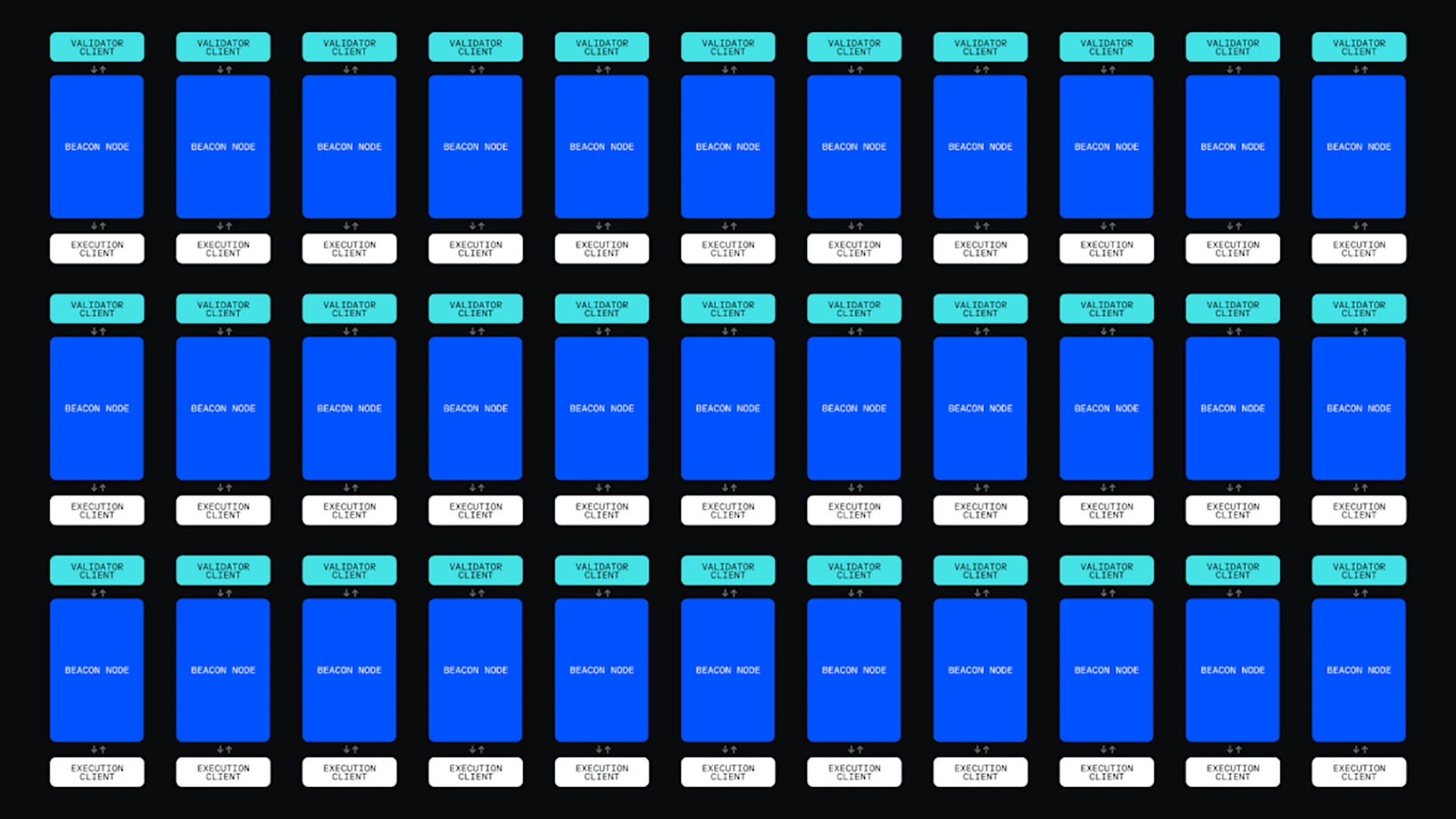
EIP-7732 introduces enshrined proposer-builder separation, moving an important part of today’s external block-building workflow into the protocol. The goal is to define responsibilities and timing more clearly while reducing reliance on an informal layer around block construction.
That design touches more than validators. Relays, builders, explorers and monitoring systems need to understand the new data flow. A testnet activation is valuable precisely because it exposes integration assumptions before the same change carries mainnet value.
| 네트워크 | 상태 |
|---|---|
| Sepolia | Activated 6 October 2026 |
| Hoodi | Scheduled for 26 October 2026 at 17:42:48 UTC |
| Hoodi coordinates | Epoch 132352, slot 4235264 |
| Gas limit | 200백만 |
| 메인넷 | Date not yet announced |
Block-level access lists support parallel work
EIP-7928 provides block-level access lists that describe the state touched by transactions. With that information available in advance, clients can execute more work in parallel and reduce unnecessary repeated access. The feature supports Ethereum’s effort to increase throughput without treating raw gas-limit growth as the only tool.
Glamsterdam also includes gas repricing and state-growth work. Those changes matter because a larger execution budget must remain affordable for nodes to verify. Raising capacity without controlling the cost of state and computation would transfer the burden to operators and weaken the network over time.

The practical checklist is deliberately boring
Hoodi operators should confirm compatible releases, update both client layers, check the exact network configuration and keep rollback notes before 26 October. Application teams should test transactions and indexing against Hoodi after activation, especially if they rely on block-building details or assumptions about execution order.
The important conclusion is precise: Sepolia has activated Glamsterdam, Hoodi has a scheduled time, and mainnet remains undecided. Keeping those three states separate prevents a useful infrastructure milestone from becoming a misleading market headline.
이 기사는 정보 제공 목적이며 투자 조언이 아닙니다.
 admin_wcContributor · World-CryptMore from