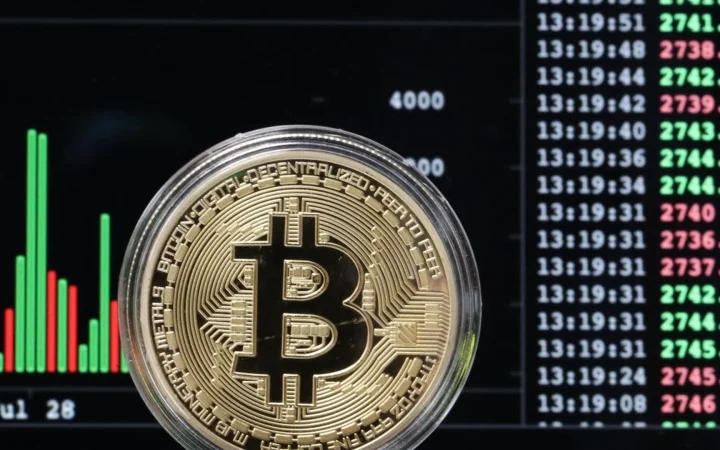










Bitcoin’s latest weakness is not only a story about price direction. A market strategy that once attracted professional capital has become less rewarding. Investors can buy spot bitcoin and sell a futures contract against it, attempting to capture the price difference without taking the full risk of a rise or fall. That difference has now narrowed sharply.
Market data published on 18 November placed annual returns from this strategy at roughly 3% to 5%. At that level, the return is close to or below the yield available on US government debt. In early trading on 19 November, Bitcoin fell to about $62,800 after reaching an intraday low near $62,100.
Large funds find the smaller premium less attractive
The strategy requires capital, secure storage, trading infrastructure and margin management. A return of 3% to 5% may not compensate for those operating costs when US government bonds offer a similar yield with less complexity. Some funds may close their positions or decide not to open new ones when existing contracts expire.
That matters because buying bitcoin on the spot market creates real demand. If fewer investors use the strategy, one steady source of demand disappears. Closing positions can also require selling spot bitcoin and buying back short futures positions, which changes liquidity in both markets.
Interest rates add pressure to the strategy
The Federal Reserve’s October meeting minutes arrived at a time when markets were already expecting tighter policy. Higher risk-free yields make digital-asset strategies with modest returns less attractive. They also increase the minimum return investors expect from assets that do not produce cash flow. The effect can persist even when there is no new negative event inside the crypto industry.
LayerZero’s ZRO was among the weakest large tokens during the same session. Its price fell before a scheduled release of tokens equal to 3.69% of circulating supply. The decline shows how caution across the market can combine with an increase in the supply of one token. Investors are less willing to buy newly released coins when liquidity is already thin.
The narrowing futures premium does not predict an automatic bitcoin collapse. It does, however, remove one supportive mechanism and makes the market more dependent on investors who buy because they expect the price to rise. A durable recovery would require either stronger spot demand, a wider futures premium or a change in the interest-rate environment.
This article is for information only and is not investment advice.
 admin_wcContributor · World-CryptMore from