








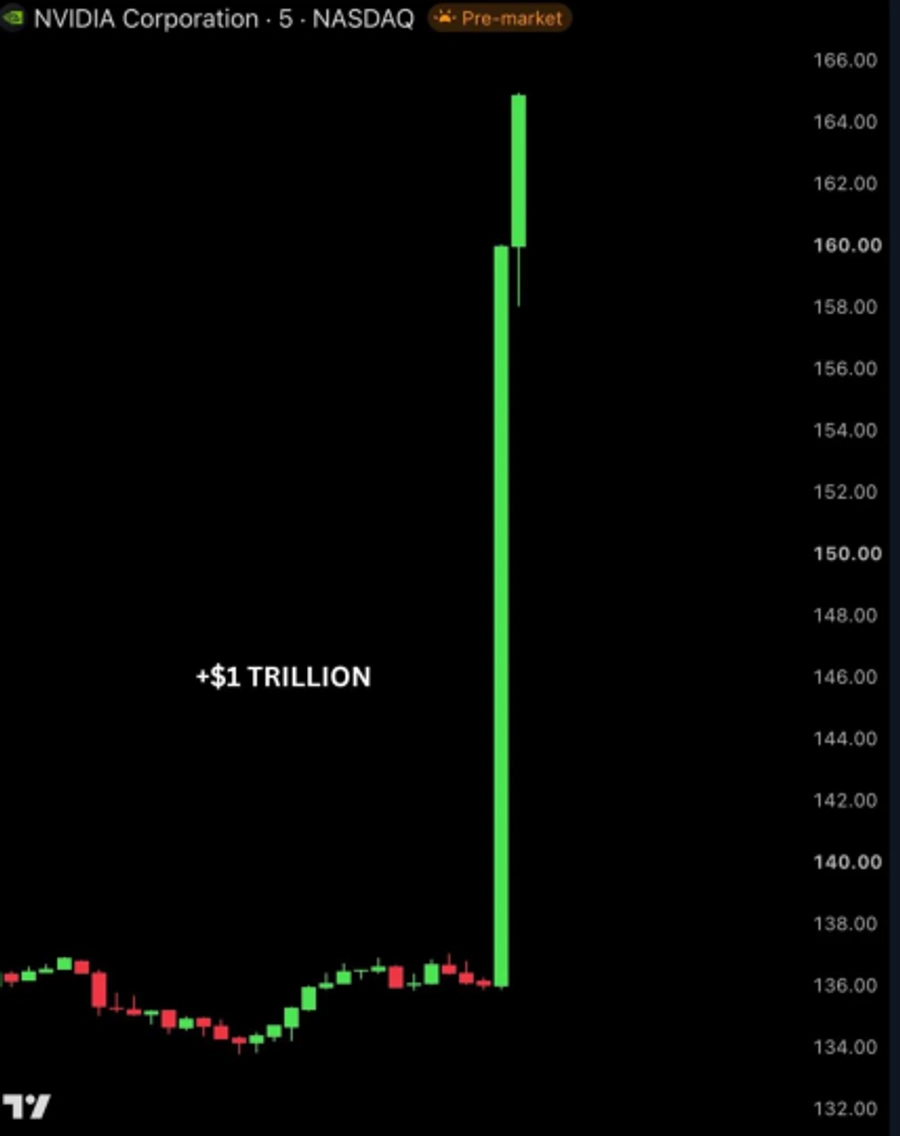
Nvidia shares rose more than 30% after the company reinstated Jensen Huang as president and chief executive. The stock traded near $165 during the strongest part of the move, compared with Friday’s closing price of $125.53. Few companies have ever added this much market value during one session.
Nvidia had about 24.15 billion shares outstanding before the rise. A price increase of roughly $39 per share therefore added about $940 billion to the company’s market value. The calculation explains why reports rounded the increase to almost $1 trillion. It is an estimate based on the share price, not new cash received by Nvidia.
The market reacted to the return of Jensen Huang
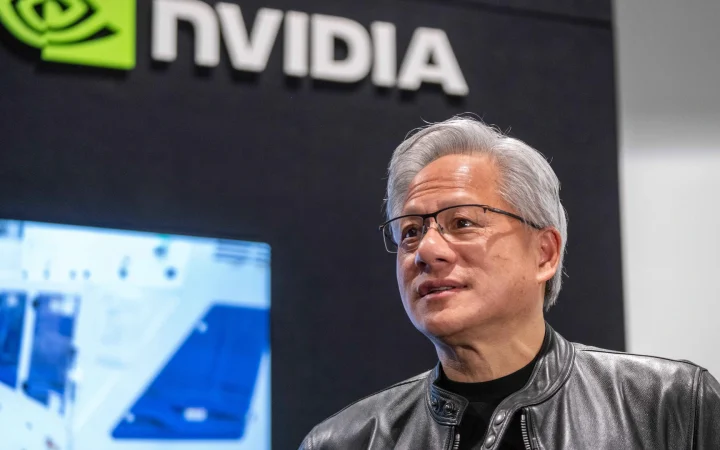
Nvidia’s board unanimously restored Jensen Huang as president, chief executive and board member. Huang had resigned earlier in November, and chief financial officer Colette Kress had managed the company on an interim basis. Kress will return to her regular position as chief financial officer.
Investors treated the decision as the removal of a major leadership risk. Nvidia had lost more than $2.5 trillion in market value from its October peak during a wider sell-off in artificial-intelligence shares. The return of the company’s co-founder does not solve every concern, but it gives the business a familiar leader during a difficult period.
The rise spread beyond Nvidia. Nasdaq-100 futures gained close to 7%, while futures linked to the S&P 500 also rose. Other semiconductor and artificial-intelligence companies moved higher as investors rebuilt positions that had fallen sharply during the previous week.
Nasdaq-100 futures reached a price limit
Some early reports said Nasdaq had halted Nvidia shares. That description is not accurate. The important event occurred in Nasdaq-100 index futures before the regular stock market opened. These contracts reached the 7% overnight price limit used by CME Group.
An overnight price limit prevents index futures from trading beyond a defined level. It does not mean that Nvidia shares were permanently suspended or that the Nasdaq stock exchange stopped operating. The rule is designed to control extreme moves while the cash equity market is closed.
The gain recovered only part of the previous decline
An increase of almost $1 trillion is exceptional, but it follows an even larger decline. Nvidia shares had fallen heavily after uncertainty over leadership, investigations and spending in the artificial-intelligence sector. The rebound therefore recovered part of the lost value rather than creating a new record.
The next test will be whether the stock can hold its gains after normal trading volume returns. A strong closing price would show that large investors accepted the new leadership decision. A rapid reversal would suggest that part of the move came from short sellers closing positions and from thin pre-market liquidity.
Nvidia remains one of the companies with the greatest influence on US technology indexes. Its sudden recovery lifted confidence across the sector, but the size of the price move also shows how unstable the market remains. This article is for information only and is not investment advice.
This article is for information only and is not investment advice.
 admin_wcContributor · World-CryptMore from