









The model is built for actions rather than long conversation
BotPsy can select functions such as creating a calendar event, sending a message or changing a device setting. The application provides a list of available tools, the model chooses one and fills in the required information. The application then performs the action and returns the result.

This design separates the language model from the actual permission to change something. A developer still needs to decide which tools are available and what confirmation is required. The release is therefore a component for assistants, not a finished consumer application.
Local processing is the main privacy argument
Tether announced the model on 11 November. Because BotPsy is small enough to run on some phones and laptops, email, calendar and contact details can remain on the device during supported tasks. The model can also continue working offline when the selected tool does not require an internet connection.
Local operation does not remove every risk. A poorly designed application could still expose data, and the model can still make an incorrect tool call. Tether recommends extra safety controls for sensitive uses and says BotPsy is not intended for financial, medical or other high-stakes automated decisions.
Tether reports strong results for the model’s size
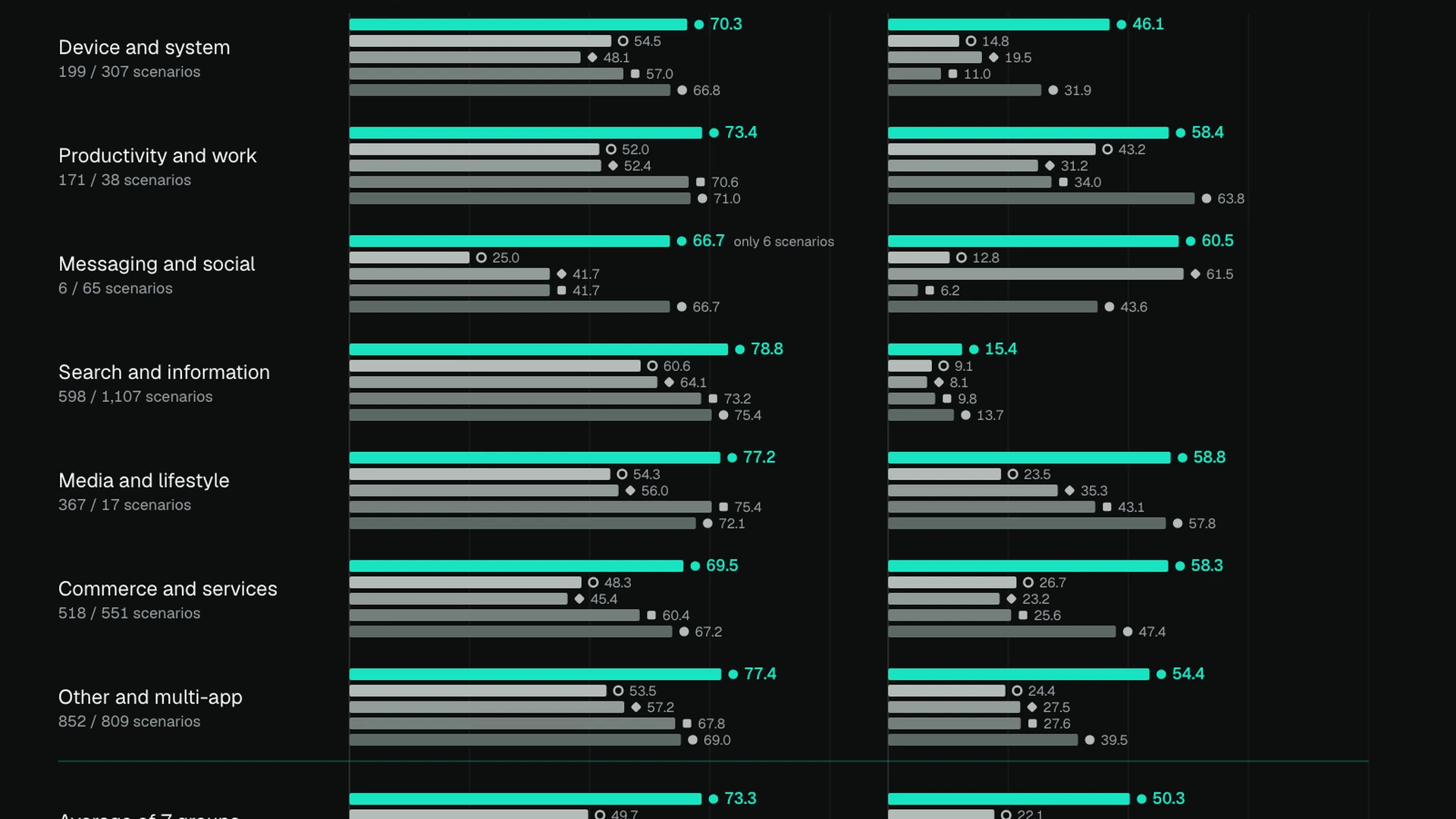
In tests published with the release, BotPsy outperformed the base Qwen3.5-0.8B model on tool-use tasks and finished ahead of several larger models. It averaged 50.3 on multi-step tasks across seven app groups, compared with 22.1 for the base model and 42.5 for Qwen3.5-2B.
These figures come from Tether’s own evaluation and should be read in that context. Benchmark scores do not guarantee reliable behaviour in every application. They do show the goal of the project: improve decision-making for a narrow set of actions instead of increasing the model size.
The weights are available for developers
BotPsy is released under the Apache 2.0 licence in several formats, including weights for Hugging Face and GGUF files for llama.cpp. Tether says English is the strongest language, with lower performance in Russian and Hindi. Complex tasks requiring many searches remain difficult.
The release broadens Tether’s activity beyond stablecoins and tokenised assets. Its practical value will depend on applications that set clear permissions, verify important actions and show users what the agent is about to do. A compact model can reduce cloud dependence, but control remains an application responsibility.
This article is for information only and is not investment advice.
 admin_wcContributor · World-CryptMore from