










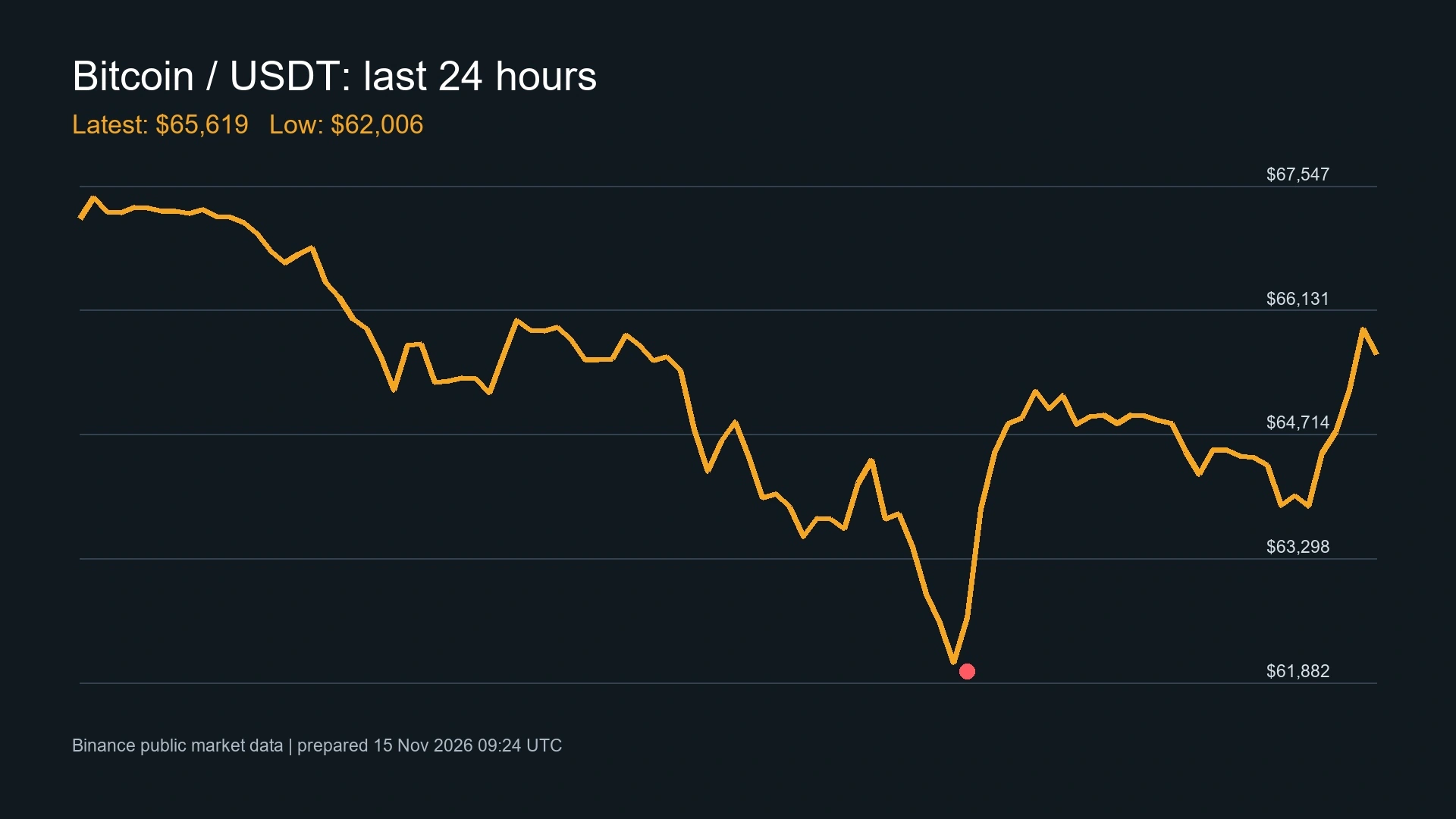
The sell-off began from a 24-hour high of $67,523. At the lowest point, the difference between the session high and low exceeded $5,500, or about 8.2%. Buyers returned below $63,000, but the recovery did not restore the opening level, leaving the market with a clear daily loss.

The figures were taken from Binance’s public BTC/USDT market feed at 07:35 UTC on 15 November. The exchange reported about $2.51 billion in quote volume for the pair over 24 hours. Prices can change quickly, so the numbers describe the market at that recorded moment rather than a fixed closing value.
A recovery from the low does not remove the risk
Moving back above $64,000 shows that buyers were willing to absorb forced selling. It does not automatically confirm that the decline has ended. The market still needs to hold higher levels and reduce the size of repeated intraday swings before traders can call the move stable.
Large ranges often trigger liquidations because leveraged positions have little room for error. When stop orders and forced closures arrive together, selling can accelerate even without a new fundamental announcement. The reverse can happen during the rebound, when short positions close and add temporary buying pressure.
| BTC/USDT measure | Value at the recorded time |
|---|---|
| Latest price | $64,234.26 |
| 24-hour change | -4.52% |
| 24-hour high | $67,523.05 |
| 24-hour low | $62,006.00 |
| Approximate high-to-low range | 8.2% |
The next signal will come from market structure, not one headline
A stronger recovery would require Bitcoin to build support above the area that failed during the sell-off. If the price repeatedly returns towards the low, buyers may be absorbing supply without enough strength to reverse the trend. A series of higher lows would provide a more constructive sign.
Traders should also watch spot volume and the behaviour of major altcoins. A Bitcoin bounce accompanied by continued weakness elsewhere can indicate that risk appetite remains limited. Broad improvement across the market would offer better confirmation.
The current move is significant because it combined a fast decline with a partial recovery in the same session. It is not a forecast. The relevant facts are the recorded low, the remaining daily loss and the unusually wide range that investors now have to manage.
This article is for information only and is not investment advice.
 admin_wcContributor · World-CryptMore from