






The objection list now contains nine issuers
OKXICE’s October 15 notice names Cerebras Systems, AppLovin, Applied Digital, Rocket Lab, CoreWeave, Verizon, Applied Optoelectronics, Broadcom and UnitedHealth Group. Eight of the nine had appeared among the 63 stocks the venue said it intended to offer on October 4.
The notice records the objections but does not give one shared reason. Applied Optoelectronics separately pointed to uncertainty about price, liquidity and volatility. It also said investors could mistake a third-party token for a product approved by the company whose share it represents.
Each objection applies to one venue
Under the SEC’s temporary framework, a venue must notify a company at least 30 calendar days before offering a tokenized version of its stock. The company can object during that period. A timely objection prevents that venue from listing the token.
The same company can make a different decision about another platform, and it can still support a tokenization project that it sponsors itself. The nine notices therefore show resistance to OKXICE’s proposal, not a single decision against every form of tokenized equity.
Companies that filed objections
- Cerebras Systems, AppLovin and Applied Digital.
- Rocket Lab, CoreWeave and Verizon Communications.
- Applied Optoelectronics, Broadcom and UnitedHealth Group.
OKXICE still plans to offer other U.S. stocks
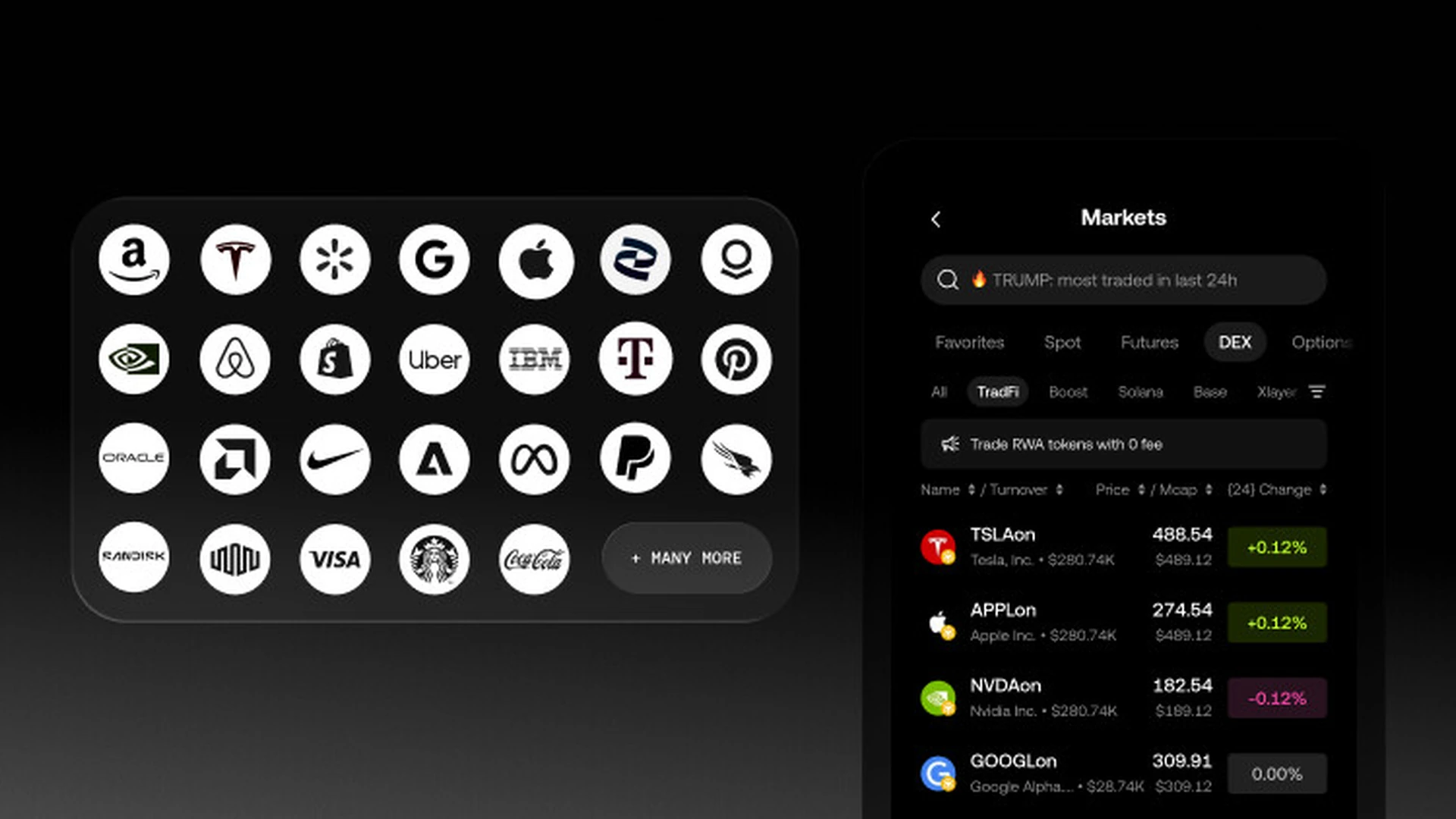
The joint venture between OKX and Intercontinental Exchange still expects to support dozens of names, including Nvidia, Apple, Microsoft, Amazon, Alphabet, Tesla, JPMorgan Chase and Walmart. The objection list removes specific issuers rather than ending the complete launch plan.
The venue intends to use permissioned liquidity pools on the X Layer network. Each stock token would trade against a stablecoin such as USDC, USDG or USDT. Traders would need identity and sanctions checks before receiving access to the pools.
The dispute is about price links and investor rights
A token that follows a public share needs a clear link to the underlying stock, its market price and the rights normally attached to ownership. Nasdaq has separately said it does not want its own shares on a venue that fails to show the best available price in real time or report to the consolidated market record.
Tokenized stocks were worth about $3.5 billion on October 15, compared with about $680 million at the start of the year. The market is growing, but the objections show that listed companies want a say in how their names and shares are represented on blockchain venues.
This article is for information only and is not investment advice.
 admin_wcContributor · World-CryptMore from