






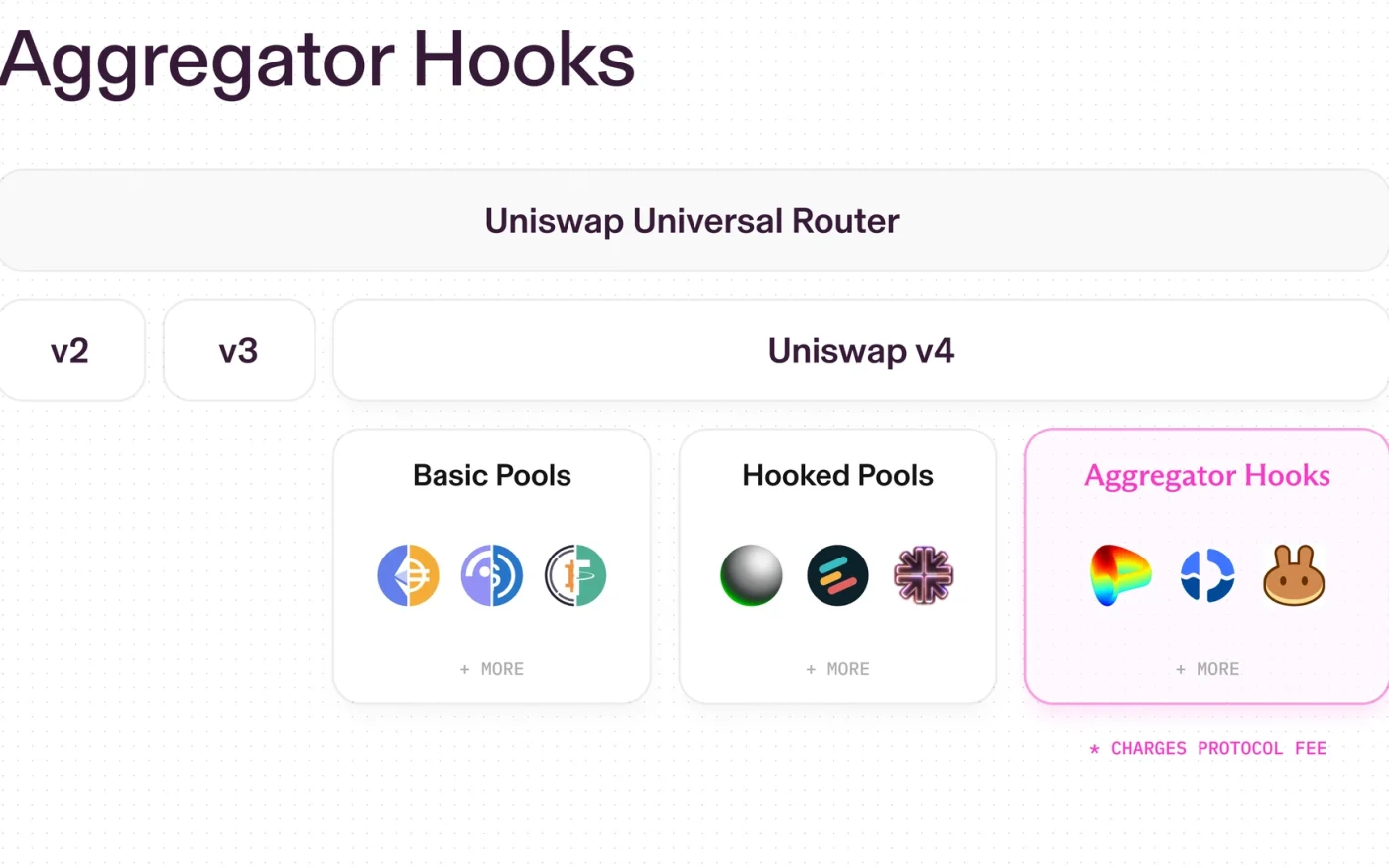
External sources appear to the router as v4 pools
Each Aggregator Hook wraps one outside liquidity source so routing software can evaluate it beside a normal Uniswap v4 pool. Seven sources are connected at launch. Uniswap says they represent more than 90 percent of decentralised exchange activity on the three supported chains.
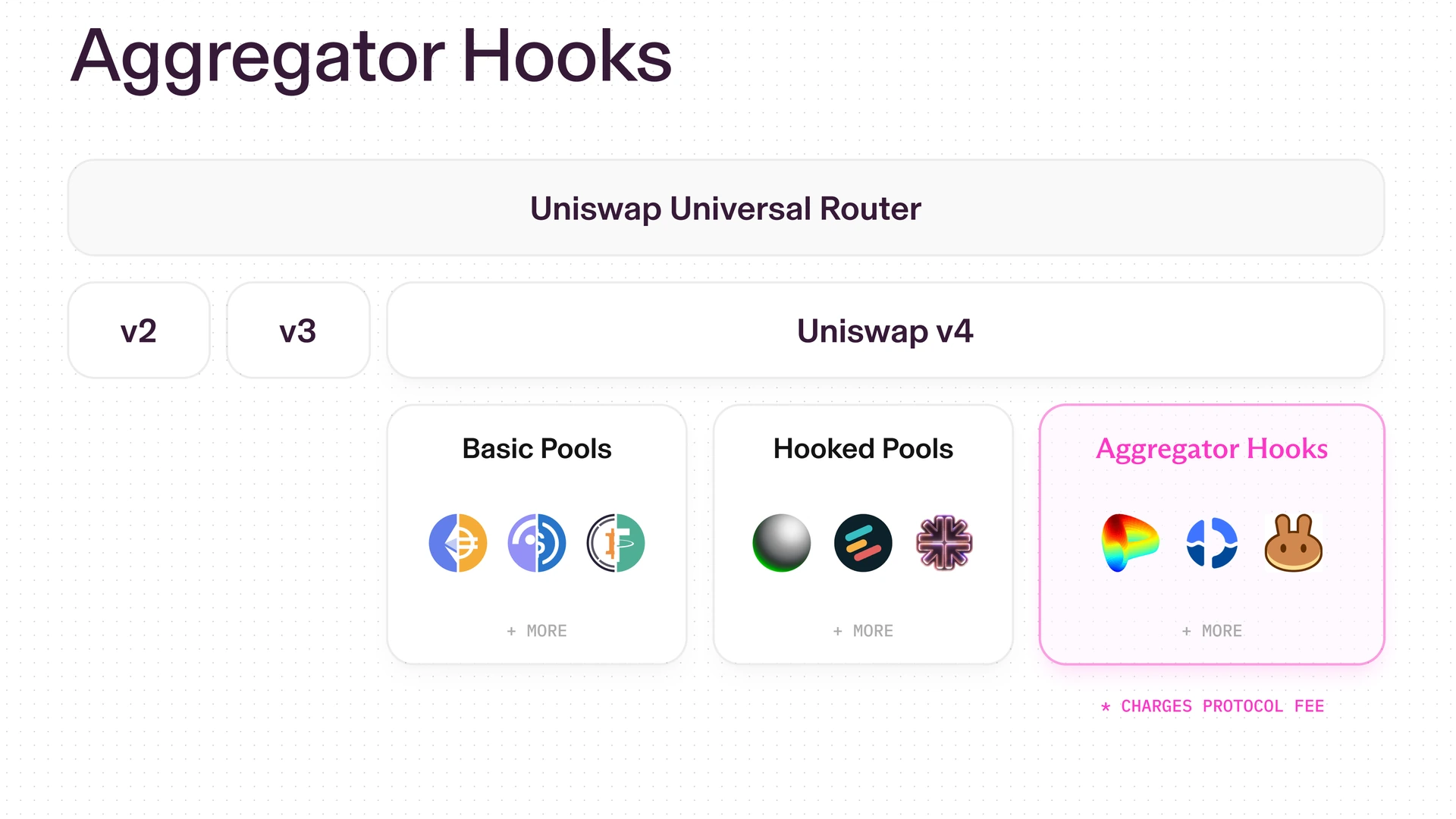
The practical change is simple for a trader: a quote can now use liquidity that is not native to Uniswap without requiring a separate visit to another interface. Quotes are refreshed each block, the router can combine several venues, and settlement still occurs in a single transaction.
Aggregator Hooks add a new source of protocol fees
Trades sent to the outside sources pay protocol fees because the hooks register those sources as v4 pools. Those fees can contribute to the UNI burn mechanism established through Uniswap governance. Protocol fee revenue is not the same as company profit: it belongs to the protocol mechanism rather than automatically becoming income for Uniswap Labs.
That does not mean every trade will leave Uniswap liquidity. The router compares available paths and selects the result it considers best. Native pools remain part of the same search, while external venues become additional options rather than replacements.
What changes for a swap
- More routes: Seven external sources join Uniswap pools in the quote search.
- One transaction: Mixed routes complete in one transaction without a new approval step.
- Protocol fees: Outside-liquidity routes can contribute to UNI burns.
- Same caution: Users still depend on the smart contracts used by the selected route.

Convenience does not remove contract risk
Hooks are smart contracts that can change how a v4 pool behaves before or after a swap. The official interface simplifies routing, but users and integrators still depend on the contracts used by the selected path and should not treat every external source as risk-free.
A route can combine Uniswap pools and outside liquidity, then settle the entire swap in one blockchain transaction without a separate approval step. The launch gives Uniswap two roles: supplying its own liquidity and providing access to other venues. The next test is whether better routes justify the added contract complexity.
This article is for information only and is not investment advice.
 admin_wcContributor · World-CryptMore from